
Cracked or Worn Heels? What a Professional Heel Repair Actually Involves
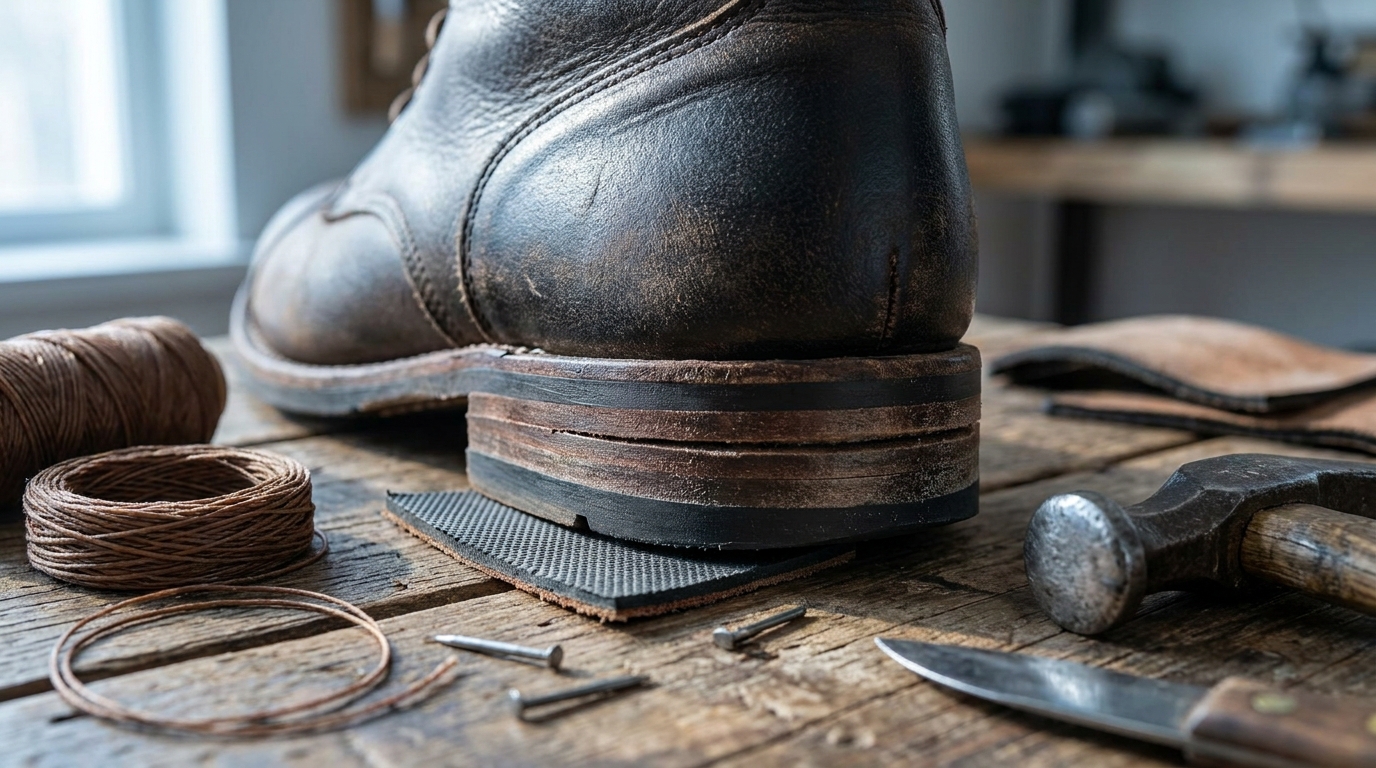
A worn-down heel is one of the most common — and most avoidable — reasons shoes get thrown out early. Left too long, a worn heel tip changes how you walk and can damage the rest of the shoe.
What actually happens during a heel repair
-
Assessment — the cobbler checks how much of the heel is worn and whether the heel block itself (not just the rubber tip) needs rebuilding
-
Removal — the old heel tip or worn heel block is stripped back
-
Rebuilding — for a simple tip replacement, a new rubber or leather tip is nailed and glued into place; for a full heel block rebuild, layers are built up and shaped to match the original heel profile
-
Finishing — the heel is trimmed, sanded, and polished to blend with the rest of the shoe
A straightforward heel tip swap takes most cobblers 15-30 minutes. A full heel block rebuild can take a day or two if it’s queued in with other work.
Signs you need a heel repair now, not later
-
The heel tip has worn through to a metal pin or the heel base itself
-
You can feel the heel tilting or the shoe sitting unevenly
-
There’s visible wear on one side more than the other (a sign the repair is overdue and may already be affecting the rest of the sole)
Waiting too long turns a $20-$35 heel repair into sole and upper damage that costs significantly more to fix — or means the shoe isn’t repairable at all.
Heel repair vs resole — how to tell which you need
If you’re only seeing wear at the heel and the rest of the sole still has tread and structure, a heel repair is the right call. If the whole sole is thin, cracked, or the stitching is failing, you’re looking at a full resole instead.
A few verified cobblers who handle heel repairs well: Unley Shoe Repairs & Giftwares in Adelaide, Super Cobbler in Hobart, and Unique Cobbler in Sydney. Browse verified cobblers near you who handle heel repairs, or check listings by city to see who’s closest.