
The Independent Cobblers Keeping Traditional Shoe Repair Alive in Australia
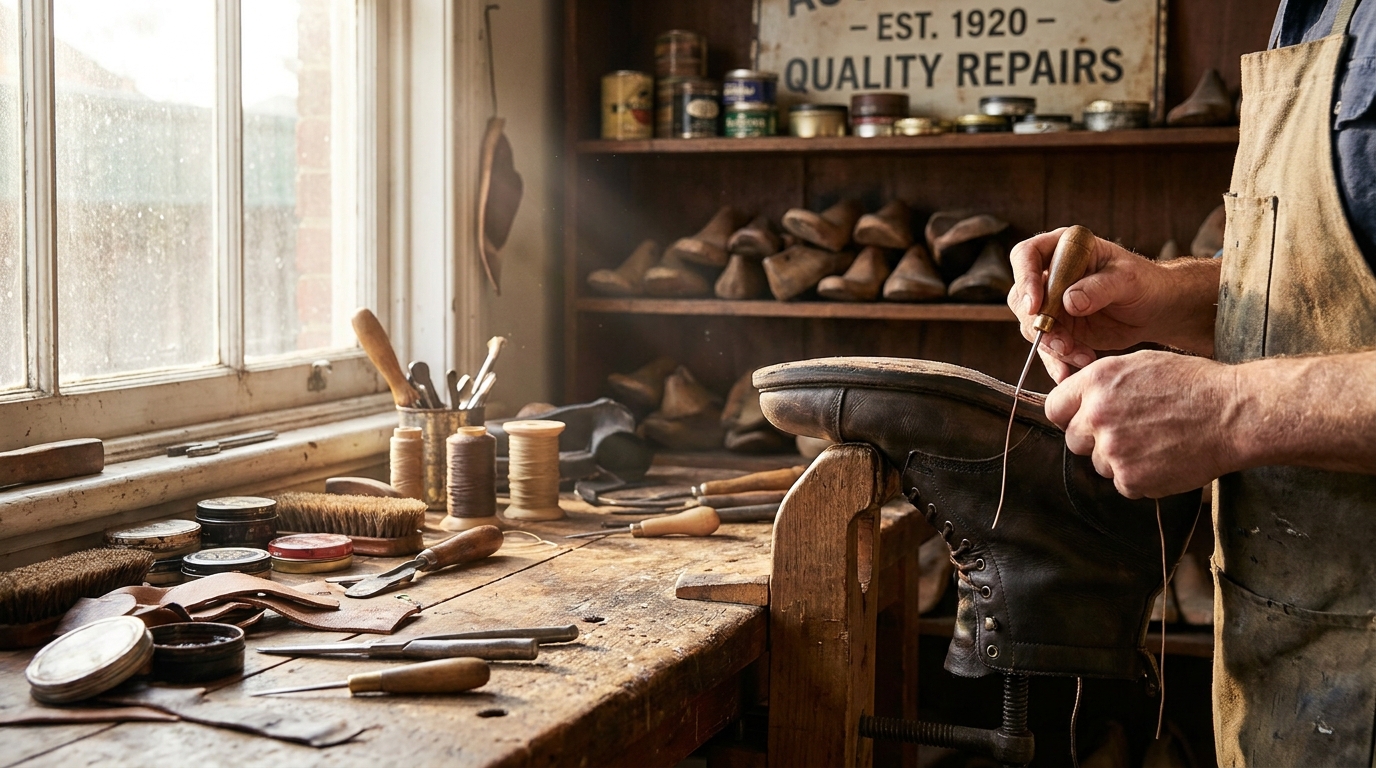
Most of what gets written about shoe repair is about technique — what a resole costs, how long a Goodyear welt lasts, whether a pair is worth saving at all. Less gets written about the people doing the work, and in Australia’s independent repair trade, that’s the part that actually explains why some shopfronts have been open for decades while others quietly close.
We pulled four listings from the Stitch & Sole directory that share a common thread: the trade was handed down, not just kept running. Here’s who they are, and what four very different workshops say about a craft that survives almost entirely on apprenticeship.
Unique Cobbler, Surry Hills — four generations on the bench
Unique Cobbler operates out of a small shopfront on Devonshire Street in Surry Hills, run by Nick, who the directory records as a fourth-generation cobbler with more than 30 years of his own experience. That’s a rare thing to find intact — most trades this hands-on lose a generation somewhere along the way, whether to retirement, rent, or a kid who chose something else. The workshop’s service list reflects that depth: resoling, heel repair, stitching, sole protection, zip repair, shoe stretching, dyeing, handbag repair, and key cutting, which is a wider spread than most single-operator shops attempt. A shop still offering handbag and leather-goods repair alongside footwear is usually one where the skills were taught broadly, not picked up from a single supplier’s training course.
Manfred’s Shoe Lounge, North Melbourne — three generations of shoemakers
A few kilometres north of the CBD, Manfred’s Shoe Lounge is run by Manfred himself, who the directory describes as coming from three generations of shoemakers and who is widely recommended as one of Melbourne’s better repairers. “Shoemaker” is doing real work in that description — it’s a different (and rarer) trade than repair alone, closer to construction than restoration. A repairer who comes from a shoemaking lineage tends to understand a shoe’s construction from the inside, which shows up in the quality of a resole or a rebuild on an otherwise well-made pair.
Downes Shoes, Fortitude Valley — more than a century in the one trade
Downes Shoes, on Wickham Street in Fortitude Valley, is the outlier on this list: a shoe store and repair workshop that the directory records as established more than 100 years ago, and one of the few independents with services built specifically around popular boot brands — Dr Martens, Solovair, Blundstone, and Redback repairs and modifications sit alongside general resoling and boot repair. For anyone who’s bought a pair of work boots or Docs and wanted something done to them that the brand’s own store wouldn’t touch — a sole swap, an orthotic modification, a repair outside warranty — a shop that has spent a century specifically on this kind of work is a genuinely useful thing to know about.
Felix’s Shoe Repair, Melbourne CBD — a European tradition inside a heritage arcade
Tucked into the Royal Arcade off Elizabeth Street, Felix’s Shoe Repair is recorded in the directory as run by a Russian-trained shoemaker — a detail sourced from directory and review listings rather than confirmed directly with the business, so treat it as reported rather than verified. What is consistent across sources is the setting: a small, old-school repair counter inside one of Melbourne’s oldest surviving shopping arcades, doing resoles and heel repairs the same way it likely has for years. There’s no website, which is true of a fair number of these shops — reputation and foot traffic still do the work that a homepage would elsewhere.
What to actually look for, if you’re choosing between repairers
None of the above is a ranking, and none of it is meant to suggest these four are the only independents worth using — the Stitch & Sole directory lists many more, in nearly every capital city and plenty of regional towns, and most of them will do a perfectly good resole. But if you’re weighing up a couple of options nearby, a few things from these four are worth using as a rough guide:
A wide service list is a decent proxy for depth of training. A shop that only lists “resole” has usually specialised there for a reason, which is fine for a straightforward job. A shop that also lists stitching, dyeing, stretching, orthotic adjustment, and handbag or leather-goods repair — like Unique Cobbler’s list — has typically had to learn those skills from someone else who already had them, which points toward a proper apprenticeship rather than a single course.
Brand-specific experience matters more than it sounds like it should. Downes Shoes taking on Dr Martens, Blundstone, and Redback modifications specifically is a sign they understand how those particular boots are constructed — the sole units, the welts, the fixings — rather than treating every boot the same way. If you’ve got a brand with an unusual construction, a repairer who already knows it is worth the extra ten minutes’ drive.
A shop with no website isn’t a red flag. Felix’s Shoe Repair, tucked into the Royal Arcade, has no online presence at all, and that’s true of a meaningful share of the trade — reputation and foot traffic have historically done the job a homepage does elsewhere. It’s a reason to check reviews and directory listings before you go, not a reason to skip the shop.
Repair over replacement only works as an idea if there’s someone skilled enough on the other end of it to make the repair worth doing. Shops built on inherited skill — a trade passed from one generation to the next, or a lifetime spent on one brand’s boots — tend to be a safer bet than a shopfront that’s been through several owners in a few years. If your usual cobbler can’t take something on, it’s worth checking the directory for one with a longer, more varied history behind the counter.