
Inside the Master Workshop: 5 Bench Secrets Every Shoe Owner Should Know
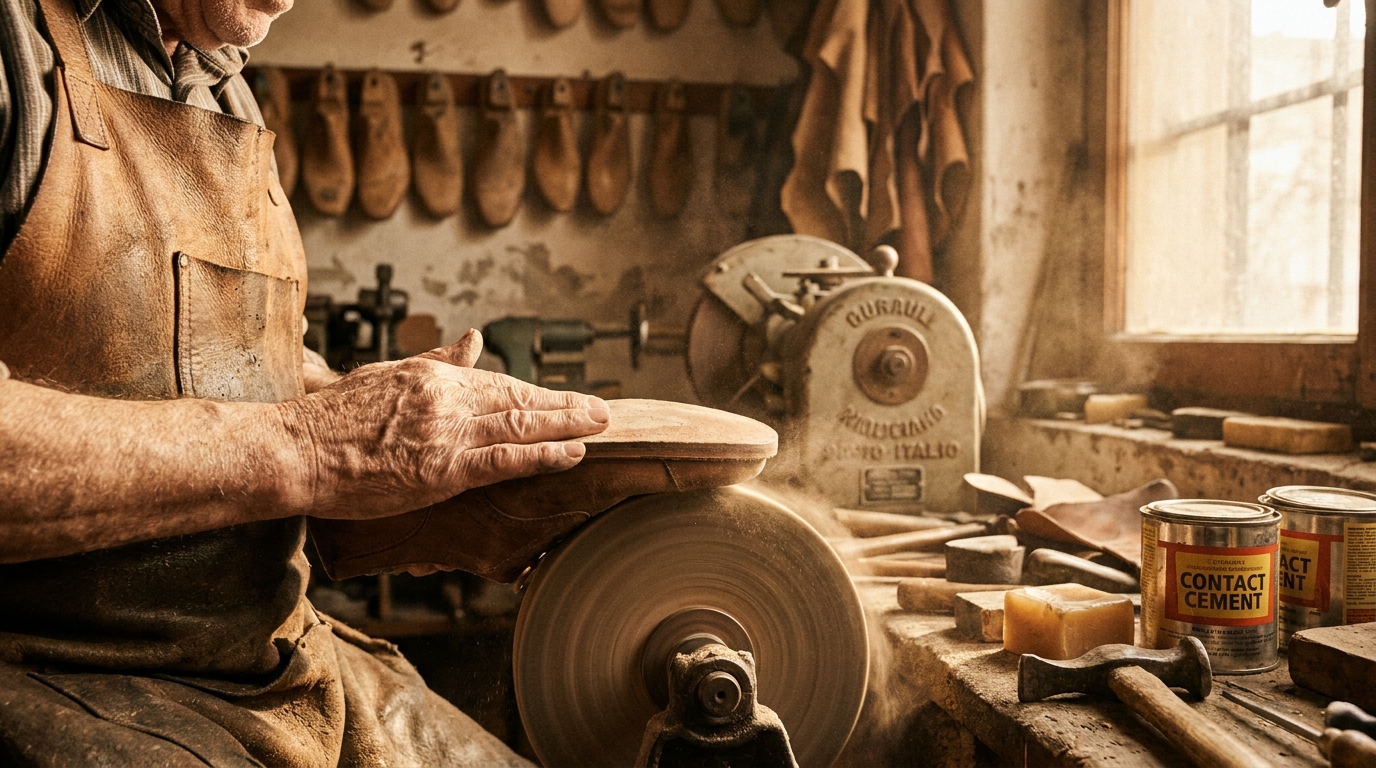
Behind the scent of tanned leather, dubbin wax, and contact cement sits the beating heart of traditional footwear: the independent cobbler’s workbench. While modern retail encourages disposable consumption, master craftsmen spend their days reversing time on worn-down heirlooms.
We spent the day at the bench to uncover what decades of working at the last reveals about shoe design, common wear patterns, and the future of the trade.
1. The 5 Bench Secrets Every Shoe Owner Should Know
Secret 1: Heel Drag Destroys Shoes from the Inside Out
Most people wait until the rubber heel lift is completely gone before visiting a cobbler. Once you grind past the top-lift into the wooden or leather heel block, repair costs double.
- Cobbler Advice: Replace the rubber top-piece when it wears down to the last 1–2mm.
Secret 2: Salt & Wet Mud Are Leather’s Worst Enemies
Wet mud draws the natural moisture and oils out of the leather fibers as it dries, leaving the grain brittle and prone to catastrophic cracking.
- Cobbler Advice: Never let mud bake onto your shoes. Brush it off dry or wipe clean with a damp cloth within 24 hours.
Secret 3: Toe Taps Save Leather Soles
The toe is the highest-wear point on a leather sole during the natural walking gait. A flush-mounted brass or steel “lulu” toe plate protects the most vulnerable 2cm of leather sole without altering walking biomechanics.
- Cobbler Advice: Install toe taps when your shoes are brand new or fresh from a resole.
Secret 4: Rotating Pairs Prevents Insole Rot
The human foot produces up to 500ml of sweat daily under normal conditions. Wearing the same leather pair two days in a row prevents the vegetable-tanned insole from drying, causing internal mildew and fiber decay.
- Cobbler Advice: Give welted shoes at least 24 hours of rest on cedar trees between wears.
Secret 5: Not All Glues Are Created Equal
DIY superglue ruins shoes. Superglue crystallizes into a rigid, brittle glass that cracks the leather and prevents professional contact cements from bonding during a proper repair.
- Cobbler Advice: Never use cyanoacrylate (superglue) on shoe leather or soles.
2. The Future of the Local Trade
As supply chains become more fragile and consumers embrace circular fashion, local repair shops are transitioning from forgotten basement corners to vital community sustainability hubs.
Supporting your local cobbler keeps traditional artisan skills alive while keeping kilograms of non-biodegradable synthetic soles out of Australian landfill.
Related reading
To turn these bench secrets into a home routine, follow the complete leather shoe care protocol. If a cobbler has already flagged worn heels, failing soles, or damaged uppers, use the repair cost and feasibility guide to decide the next step with clearer expectations.