
What Is a Norwegian Welt? Boot Construction Explained
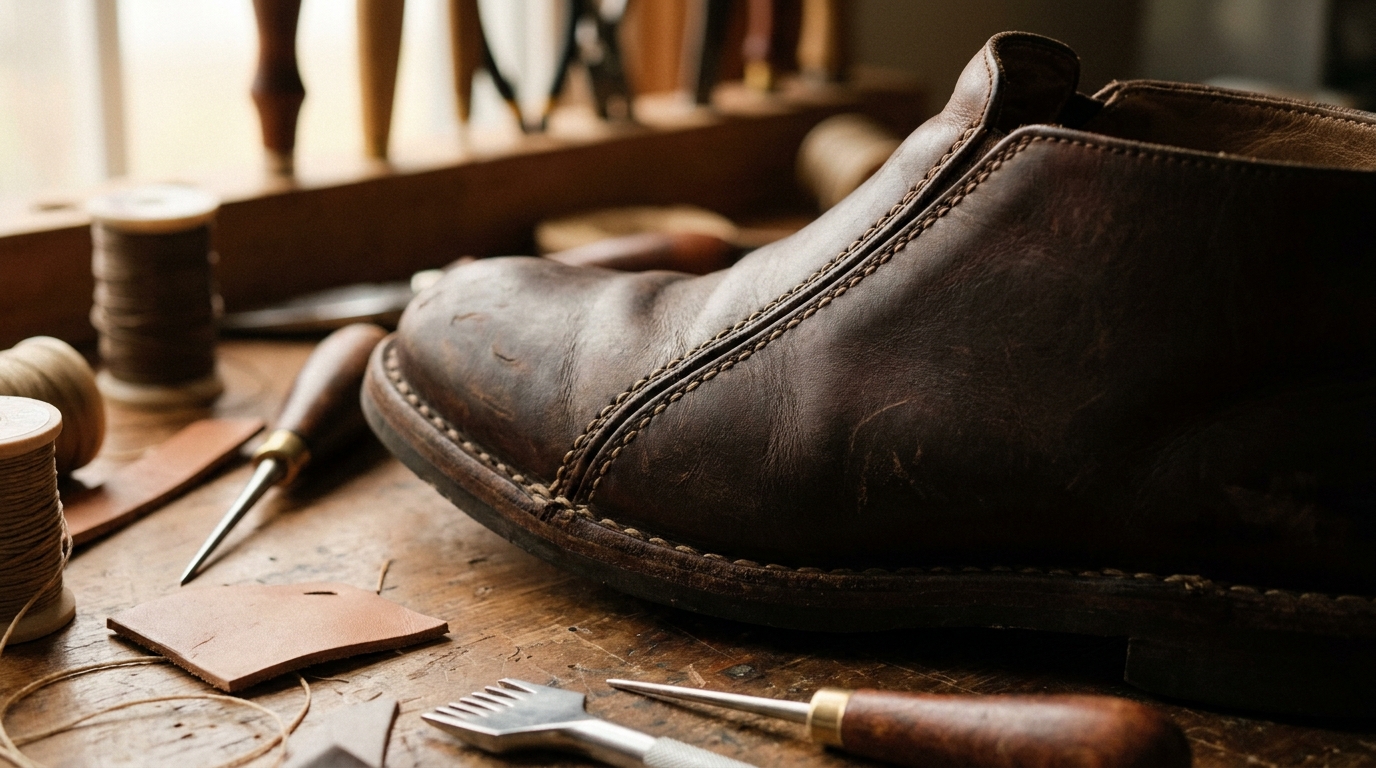
Norwegian welt (also called Norvegese) is the construction method behind some of the toughest hiking, hunting, and heritage work boots on the market — instantly recognisable by the exposed, hand-stitched seam running around the outside of the boot rather than tucked underneath it.
How a Norwegian Welt Is Built
Where a Goodyear welt hides its main seam inside a channel, a Norwegian welt puts the stitching on full display, angled outward across the welt edge.
-
The upper is turned outward at the bottom rather than tucked under, and stitched directly to the welt and insole in a diagonal or “V” pattern that crosses over itself.
-
A second row of stitching then joins the welt to the outsole, giving two visible rows of thread instead of one.
-
Because the seam sits proud of the boot rather than recessed, it’s traditionally sealed by hand rather than machine, which is part of why genuine Norwegian welting is slower and more expensive to produce than Goodyear welting.
-
The result is an unusually rigid, weather-sealed join that resists water and grit working in from the side — useful in boots built for mud, snow, and rock rather than pavement.
Why It Matters for Boot Owners
-
Weather sealing: the double stitch and outward-turned upper make Norwegian welted boots among the most water-resistant welted constructions available, ahead of a standard Goodyear welt in wet or snowy conditions.
-
Ruggedness: the exposed stitching is thicker and more heavily reinforced than a Goodyear inseam, built to survive abrasion against rock and scrub rather than just everyday footpaths.
-
Resoleability: genuine Norwegian welted boots can be resoled in much the same way as Goodyear welted ones, since the outsole still attaches to a separate welt rather than to the upper directly — though fewer Australian cobblers are set up to handle the double stitch pattern, so it pays to ask before you buy.
Norwegian Welt vs Goodyear Welt
The two methods solve a similar problem — keeping the outsole separate from the upper for repairability — but Norwegian welting trades speed and cost for extra weatherproofing and visual ruggedness. Goodyear welting is more common, faster to produce, and easier to find a cobbler for. Norwegian welting shows up mostly on premium hiking, hunting, and heritage work boots where the exposed stitch is as much a design signature as a functional one.
What to Ask Before You Buy or Repair
Because the construction is less common, confirm with the retailer or cobbler that a boot is genuinely Norwegian welted rather than finished with a decorative “storm welt” — a stitched-looking flap glued over a cemented sole purely for appearance. A real Norwegian welt will show stitching that penetrates right through the welt and insole rib, not just the surface leather.
Related reading
For how this compares to the more common Goodyear welt and Blake stitch methods, see What Is a Goodyear Welt?, What Is a Blake Stitch?, and The Anatomy of a Resole. Before paying for a resole on any welted boot, check current pricing in our repair cost and feasibility guide.