Shoe Stretching in Brisbane: What a Cobbler Can (and Can't) Fix
New leather shoes that pinch across the toes, boots that bite at the heel, loafers that feel half a size too snug through the vamp — it’s one of the most common walk-in complaints at any Brisbane repair counter, and one of the easiest topics to get bad advice about online. A lot of what circulates about shoe stretching overstates it (“any shoe can be stretched to fit”) or dismisses it entirely (“stretching doesn’t really work”). The honest answer sits in between, and it depends almost entirely on what the shoe is made of and exactly where it’s tight.
What a cobbler can actually stretch
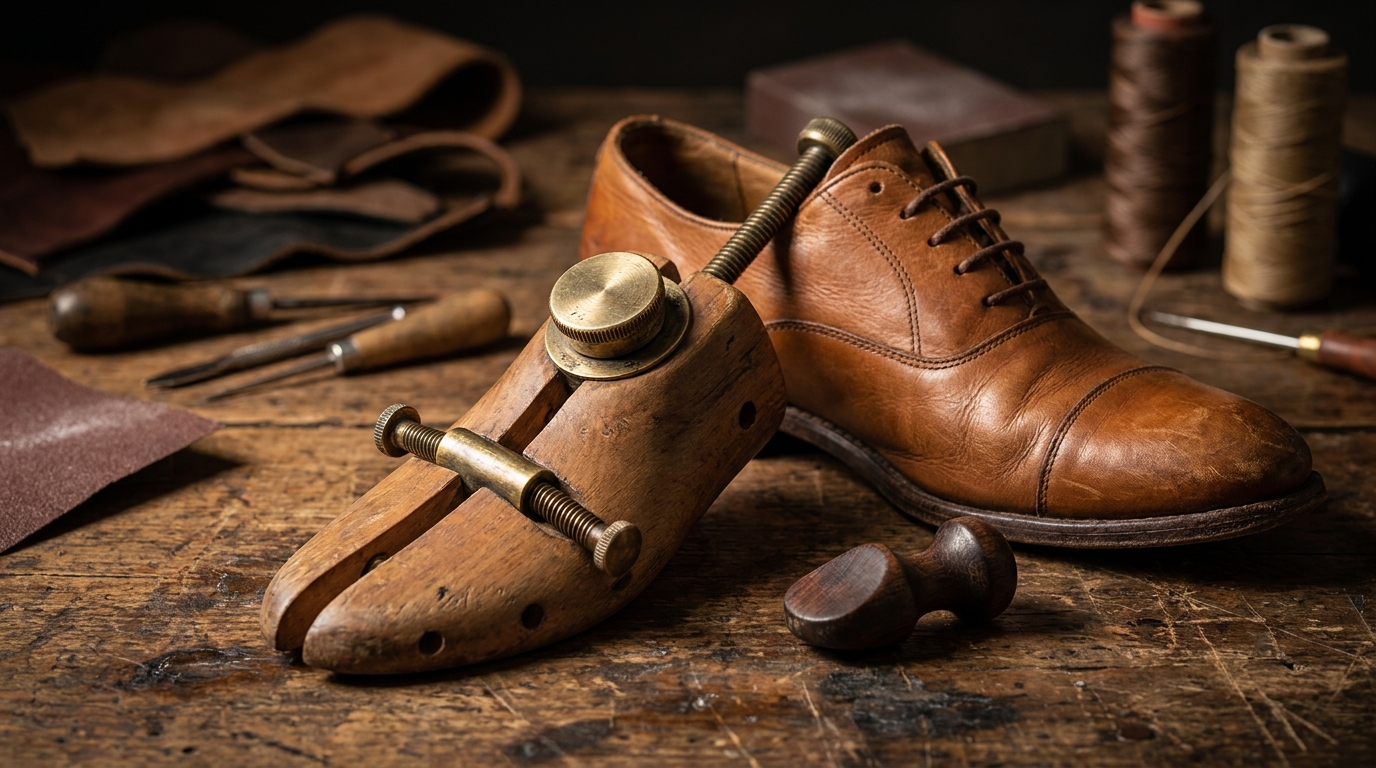
Leather is a natural material, and under the right combination of moisture, gentle heat and sustained pressure, it will relax and give — typically somewhere between half a size and a full size, concentrated in specific spots rather than across the whole shoe. A cobbler does this with tools built for the job: a wooden two-way shoe stretcher that widens the toe box and lengthens the shoe on separate adjustable dials, and bunion or corn plugs — small screw-in attachments that target a single pressure point, such as a bunion or a prominent toe joint, without stretching the whole shoe out of shape. Stretching spray or a light conditioner softens the leather fibres first, and the shoe is left on the stretcher, sometimes overnight, rather than forced in one sitting.
This works well on full-grain and most top-grain leather, and on suede and nubuck, which respond quickly to a stretcher since the nap is naturally forgiving. It does far less for structured dress shoes with a stiff toe box or a shank underfoot, and not much at all for most synthetic uppers — vinyl and PU “leather” don’t share the same fibre structure, so they tend to either barely move or crease under sustained pressure rather than stretch cleanly.
Most jobs take a day or two rather than a single sitting, because leather needs time on the stretcher to actually relax rather than just spring back once the pressure comes off. A cobbler who hands a pair back five minutes after you drop them off probably hasn’t done much more than flex them by hand.
What it genuinely can’t fix
A shoe stretcher changes width, and to a lesser extent toe room — it doesn’t change the shoe’s actual size, shorten a too-long shoe, or fix a style that’s simply the wrong shape for your foot. Patent leather is the clearest no: its glossy finish sits as a coating over the leather, and stretching tends to crack that finish rather than relax it. Fully bonded or cemented synthetic shoes are much the same story. And a shoe that’s genuinely a full size too small is rarely a stretching job — a cobbler worth trusting will say so honestly rather than take the work and send you home disappointed. If in doubt, it’s worth asking directly what result they’d actually expect before you commit, the same way you’d vet any cobbler you’re trusting with a repair in the first place.
That honesty cuts both ways. If a shoe just needs a half-size of give at the toe, stretching is usually the right call over giving up on a pair you like. If it’s genuinely the wrong size or shape for your foot, no amount of time on a stretcher fixes that, and a straight-talking cobbler will tell you to return them or move on rather than take the job anyway.
Finding this service in Brisbane
Shoe stretching is a fairly specialised request — not every repair counter keeps bunion plugs and a proper two-way stretcher on hand, so it’s worth asking before you drop a pair off. Hallelujah ShoeWorks, a family-run cobbler that’s been operating out of Brisbane CBD for 25 years, lists shoe stretching alongside its handbag repair and key cutting work — a useful example of the kind of generalist repair shop that’s typically set up for this sort of job, rather than treating it as an afterthought.
More broadly, Brisbane has a reasonable spread of long-running cobblers across the CBD and surrounding suburbs, and shoe stretching sits alongside the other repair work most of them do day to day. It’s worth calling ahead and asking specifically whether a shop stocks a stretcher and bunion plugs, since not every shopfront does, and a quick phone call saves a wasted trip.
A few practical notes before you drop a pair off
Bring the shoes clean and dry — a cobbler can’t safely apply heat or stretching spray to leather that’s still damp or caked in dirt. Be specific about where they pinch: “tight across the little toe on the left shoe” gets a far more targeted result than “these are a bit snug.” And treat it as a process rather than a single fix. The honest ones will often ask you to come back and try the shoes on after the first stretch, then adjust again if needed, rather than promise a perfect fit in one pass.
Stretching is genuinely one of the better-value repairs out there — usually far cheaper than replacing a pair of shoes you otherwise like, and kinder to your feet than just “breaking them in” the hard way. But it only works within real limits, and a straight answer about those limits from your cobbler is worth more than one who tells you what you want to hear.