
Handbag Repair in Adelaide: What a Cobbler Can Actually Fix
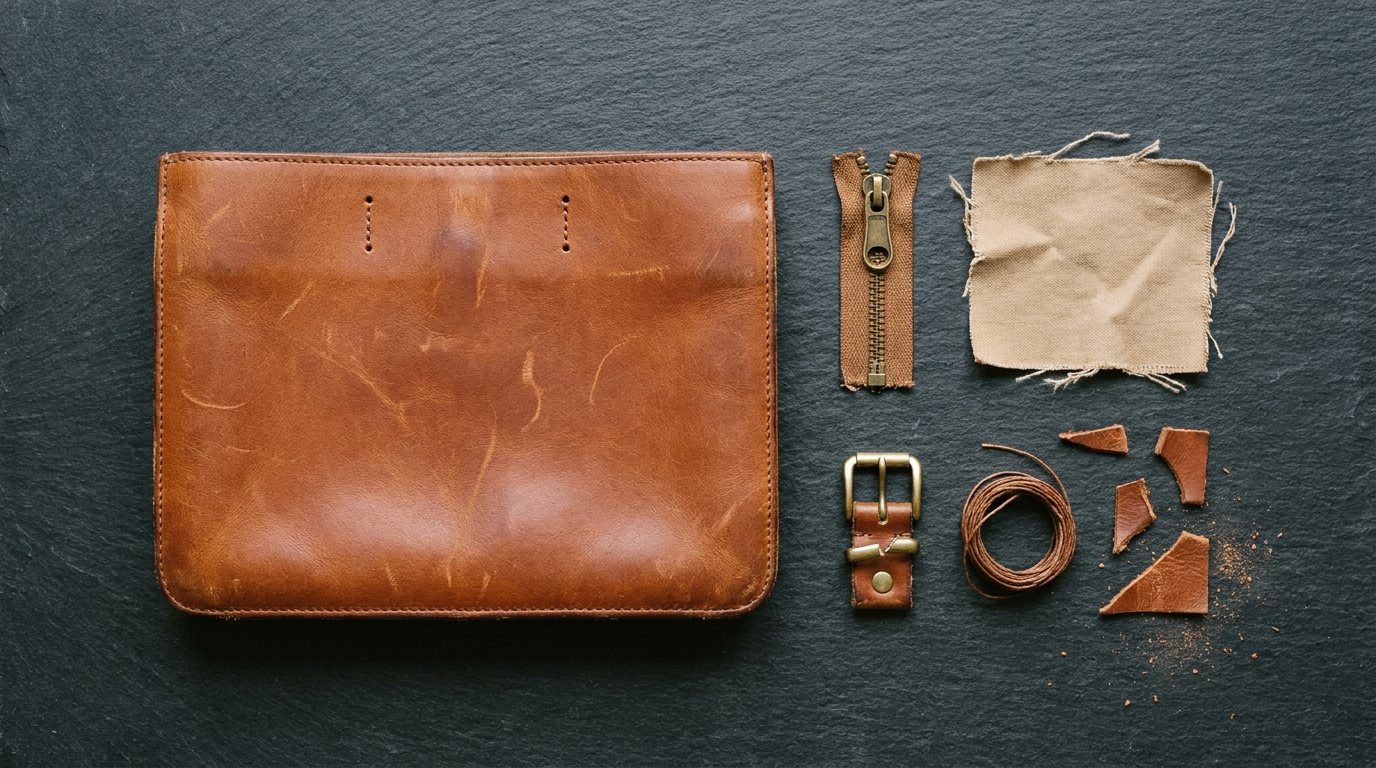
A handbag doesn’t wear out the way a shoe does. There’s no heel strike, no flex point taking a hundred thousand steps a year. What kills a good bag is almost always one of four things: a zip that’s jumped its track, a strap or handle torn at the stitch line, hardware that’s corroded or snapped, or a lining shredded from keys and coins rattling around for a decade. None of that means the bag is finished — and a fair amount of it sits well within a cobbler’s skill set, not just a specialist leather-goods restorer’s.
What a cobbler can genuinely fix on a bag
Cobblers spend their working life around exactly the materials handbags are built from — leather, canvas, coated cotton, brass and zinc hardware — so a lot of shoe-repair skill carries straight over.
Zips. This is the single most common bag repair, and one of the most misunderstood. Nine times out of ten, a “broken” zip isn’t broken at all — the slider has simply worn wide and stopped gripping the teeth, or it’s jumped the track. A cobbler with the right slider stock can often replace just the slider rather than the whole zip, which is faster and less invasive to the lining. Where the zip tape itself has torn away from the fabric, that’s a full zip replacement — still very doable, but it’s a proper unpick-and-resew job rather than a five-minute fix. We’ve gone into the zip and buckle side of this in more depth in our general guide to what a cobbler can fix on zips, buckles and eyelets, which applies as much to bags as it does to boots.
Straps and handles. Where a strap has torn at the stitch line — the most common failure point, since it’s under constant load — a cobbler can usually restitch it, often reinforcing with a strip of matching leather underneath if the original has stretched or split. A snapped handle can sometimes be spliced; if the leather itself has perished rather than just the stitching, honest advice is replacement rather than a repair that fails again in a month.
Hardware. Buckles, clasps, D-rings and turn-locks corrode, bend or snap off entirely, especially on bags that have spent time near the coast. Swapping hardware is straightforward when a close match exists; getting an exact match on a bag with distinctive branded fittings is the part that takes patience, and it’s worth asking your cobbler to be upfront about what’s actually available rather than promising a replica that isn’t.
Linings and corners. A shredded interior lining can be replaced or patched, and worn corners — usually the first place any bag shows its age — can often be reinforced or re-dyed rather than left to keep fraying.
What’s usually a lost cause
A good cobbler will tell you straight if a bag isn’t worth the work, rather than taking the job anyway. Bonded or “PU leather” bags that have started to flake and peel are breaking down as a material; no amount of conditioning or stitching stops that, because it’s the surface finish itself failing, not just wear on top of it. Bags built around an internal frame that’s cracked are usually beyond a straightforward fix. And where the leather has genuinely dried out and cracked through — rather than just lost its surface finish — you’re often looking at a rebuild rather than a repair, which can cost more than the bag is worth.
What it costs, and how long it takes
As a rough guide, a slider swap or a restitched strap is a modest job — closer in scale to a heel repair than a full resole — while a full zip replacement, hardware sourcing or a relining job is a bigger undertaking and priced accordingly. Turnaround tends to be faster than a resole too, since there’s no soling stock to wait on, though a specific hardware match can add days while it’s tracked down.
Where to get it done in Adelaide
Not every shoe repair shop takes on bag work — it’s a genuine sub-specialty, and it’s worth asking before you turn up with a bag under your arm. Two long-running Adelaide operators list handbag repair among their services: Unley Shoe Repairs & Giftwares in Unley, and Jetty Road Shoe Repairs down at Glenelg — both also handle zip repair work alongside their shoe and boot trade. If you’re elsewhere around Adelaide, it’s worth calling ahead and asking specifically whether a shop takes bag work, since “shoe repairs” on the shopfront doesn’t always mean it does.
If you’re not sure how to vet a repairer generally — bag work or shoe work — our buyer’s checklist for choosing a cobbler covers what to look for and what to ask before you hand anything over.
The bottom line
Most of what goes wrong with a handbag — a jammed zip, a torn strap, tired hardware — is repairable, often for a fraction of replacement cost, and there’s real satisfaction in getting years more out of a bag you already like carrying. The exceptions are the bags fighting their own materials: peeling bonded leather, a cracked internal frame, leather that’s gone past conditioning. Knowing which camp yours falls into is really just a matter of asking someone who does this for a living to take an honest look.
FAQ
Q: Can a shoe repair cobbler really fix a handbag, or do I need a specialist leather-goods repairer?
A: For zips, straps, hardware and linings, a competent cobbler can usually handle it — those are the same materials and stitching techniques used in shoe repair. Fine leather-goods restoration, like structural rebuilds or replicating designer hardware, sometimes calls for a specialist, but that’s the exception rather than the rule.
Q: Is it worth repairing a cheap handbag, or should I just replace it?
A: That depends more on the material than the price you paid. A cheap bag in genuine leather or sturdy canvas with a simple zip or strap fault is often worth fixing. A cheap bag in bonded or “PU leather” that’s starting to flake usually isn’t — the material itself is breaking down, and no repair fixes that.
Q: Will a repaired zip be as strong as the original?
A: A properly fitted slider replacement on an intact zip tape should hold up as well as the original. A full zip replacement is only as good as the tape and stitching around it, so it’s worth asking your cobbler exactly what they’re replacing versus patching.
Q: How do I know if my bag’s hardware can be matched?
A: Generic hardware — standard D-rings, turn-locks, zip pulls — is usually easy to match closely. Branded or distinctive designer fittings are harder to match; ask your cobbler to be upfront about whether they can get a close equivalent or whether you’d end up with a visibly different piece.