
How to Care for Suede and Nubuck Shoes (Without Ruining Them)
The one habit that ruins suede boots
Here’s the trap: someone spends good money on a pair of suede boots, notices a scuff a few weeks in, and reaches for whatever leather cream or wax is already sitting in the cupboard. That single move is usually what turns a scuff into a permanent problem. Suede and nubuck aren’t sealed, grain-side leathers — they’re cut so the napped underside of the hide faces out, which is exactly what gives them that soft, matte texture. Feed that nap any oil-, wax- or cream-based product and it saturates the fibres, flattens the pile, and leaves a dark, shiny patch that no amount of brushing will lift. There isn’t a fix for it — only a re-dye, which changes the shoe’s colour and finish permanently.
So the starting point for suede care is a mental one: forget almost everything you know about caring for smooth leather. Suede and nubuck get their own toolkit, their own products, and their own rules.
Brushing: the daily habit that does most of the work
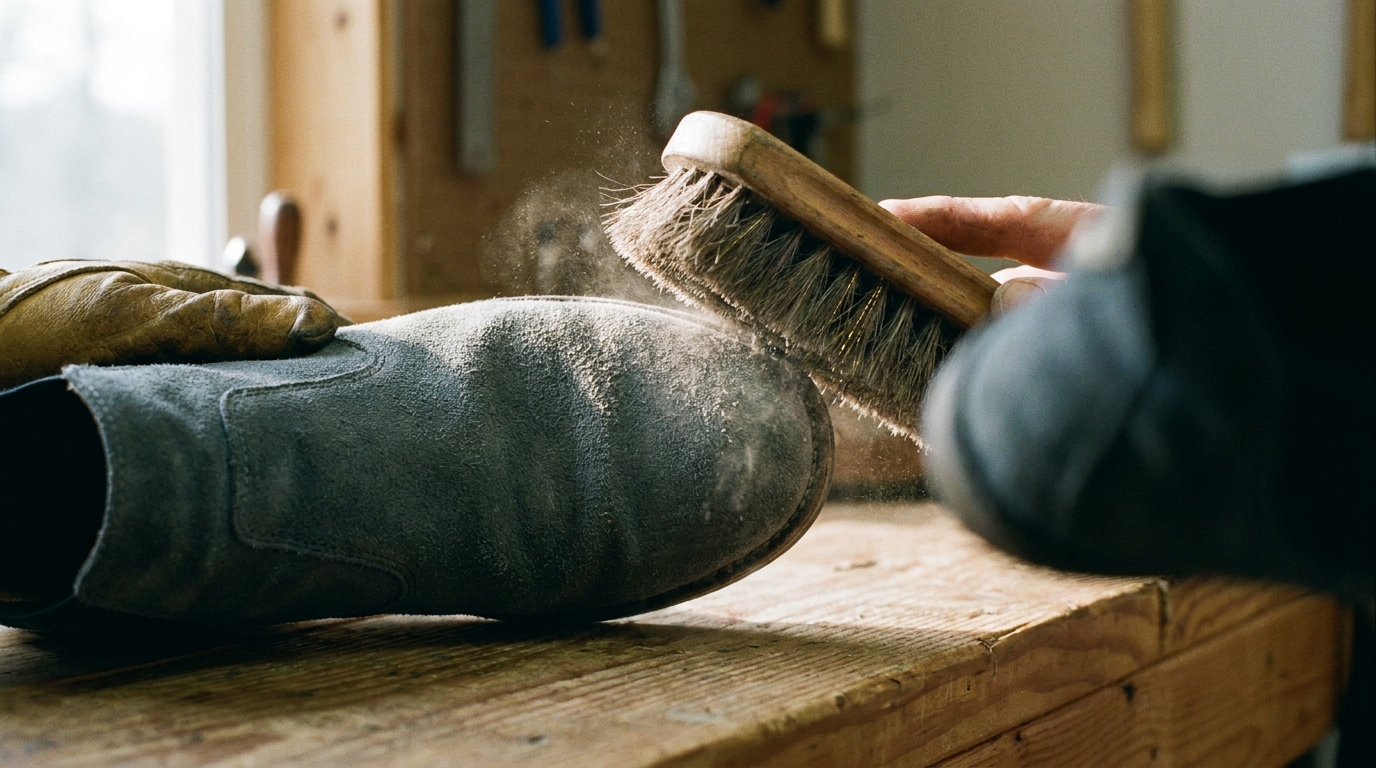
A suede brush — the kind with brass wire bristles on one side and stiffer nylon or crepe on the other — is the single most useful thing you can own if you wear suede regularly. Brush in the direction of the nap, using light, even strokes, and do it before the shoes go back in the cupboard, not just when they look obviously dirty. Regular brushing lifts dust and light surface dirt before it has a chance to work into the fibres, and it keeps the nap standing up rather than getting matted down and shiny in the high-wear spots like the toe box and heel counter.
For a fresh scuff, a suede eraser or a suede-specific cleaning block does most of what you’d otherwise reach for a cream for. Rub it gently over the mark in short strokes, then brush the area afterwards to re-raise the nap. It’s genuinely surprising how much lifts out this way without any liquid or product touching the shoe at all.
Stains: patience beats scrubbing
Wet stains are the one place suede punishes impatience. If something spills on suede, resist the urge to wipe it — that just spreads the mark and drives it further into the fibres. Blot gently with a dry cloth to lift any excess, then let it dry completely and naturally, away from direct heat. Trying to speed-dry suede with a hairdryer or near a heater tends to stiffen and discolour the patch unevenly.
Once it’s dry, a light water stain will often brush out on its own, or respond to a light going-over with the suede eraser. Oil and grease marks are stubborn in the other direction — cover the mark with a dusting of cornstarch or talcum powder, leave it to sit overnight so the powder has time to draw the oil out, then brush it away. It rarely lifts a stain completely in one pass, but it’s a low-risk first move, and repeating it does more than any at-home liquid cleaner will. For a stain that’s set in, or covers a large area, a professional clean from a cobbler who works with suede is worth more than a bottle from the supermarket — Unique Cobbler in Surry Hills and Super Cobbler in Moonah both list leather cleaning among their services.
Weatherproofing without wax
Suede and nubuck absorb water readily, which is the main reason people reach for the wrong product. The right one is a silicone- or fluoropolymer-based suede and nubuck protector spray — never a leather wax, dubbin, or cream, which will darken and mat the nap the same way an accidental spill would. Apply it to clean, dry shoes, holding the can at the distance the label recommends, and let it dry fully before wearing them. It won’t make suede waterproof, but it buys meaningful water resistance against rain and puddles, and it’s worth doing before the first wear of a new pair, not just once the wet season has already started.
There’s no single reapplication schedule that holds for every product — it depends on the specific spray and how often the shoes are worn. As a rough habit, treat them again every few weeks through wet weather, and always after a clean or a heavy brushing session that’s stripped the previous coat. Check your can’s label for the manufacturer’s own guidance rather than guessing.
Why this is a sustainability habit, not just a chore
None of this is about being precious with a single pair of boots — it’s about not replacing suede shoes every season because nobody told you the cream in the cupboard was the wrong product. A brush, an eraser, and a protector spray cost a fraction of a replacement pair, and used consistently they’re the difference between suede that looks tired after a year and suede that’s still doing its job after five. Buying less, more deliberately, and keeping it in service longer is a quieter form of sustainability than anything with a label on it — it just requires knowing which five-minute habits actually work.
When to call in a cobbler
Brushing, an eraser, and a protector spray will carry most suede and nubuck shoes through years of normal wear. Call in a professional when a stain has set in properly, when the nap has gone patchy or matted across a wide area, or when the problem isn’t really about the suede at all — a separating sole or a worn heel is a repair job, not a cleaning one. A cobbler who lists suede or leather cleaning among their services can usually recover a stain that’s gone past what’s safe to try at home, and can re-dye or re-nap a section without it looking obviously patched.
FAQ
Q: Can I use leather cream or wax on suede or nubuck shoes?
A: No. Cream, wax, dubbin and polish are made for smooth grain leather and will saturate suede’s nap, flattening it and leaving a dark, shiny patch that doesn’t brush out. Suede needs a brush, a suede eraser, and a dedicated silicone- or fluoropolymer-based protector spray instead.
Q: How do I get a grease or oil stain out of suede?
A: Blot any excess straight away without rubbing, then cover the mark with a light dusting of cornstarch or talcum powder and leave it overnight so the powder can draw the oil out before brushing it away. It may take more than one attempt, and a stain that’s set in or covers a large area is usually worth taking to a cobbler experienced with suede.
Q: How often should I reapply suede protector spray?
A: It depends on the product and how often the shoes are worn, so check the specific can’s label rather than following a fixed rule. As a general habit, most people re-treat every few weeks through wet weather and always after a clean or a heavy brush that’s stripped the previous coat.