
The Off-Season Shoe Storage Mistake That's Slowly Wrecking Your Leather
Most people ruin their good leather shoes the same way: not by wearing them too hard, but by putting them away wrong. A pair that survives three winters of Melbourne rain can come out of six months in a garage tub looking like it’s been left in the weather — bloomed with white mould, stiff at the vamp, the leather gone the texture of a dried-out wallet.
It’s not bad luck. It’s condensation, trapped moisture and zero airflow, and it’s almost entirely preventable.
Why storage does more damage than wear
Leather is porous. It’s still “breathing” long after the shoe’s been taken off — absorbing and releasing moisture from the air around it. Worn regularly, that’s fine: your foot’s warmth and the day-to-day airflow keep things moving. Shut away in a sealed box or a plastic tub, there’s nowhere for that moisture to go. It condenses on the inside of the leather instead of evaporating off it, and that’s exactly the environment mould spores need.
Australia doesn’t make this easier. Coastal and subtropical cities carry noticeable humidity for large parts of the year; a Queenslander under the house or a poorly ventilated built-in robe in a coastal apartment can stay damp for weeks at a time without anyone opening the door to check. Inland and in drier states it’s the opposite problem — low humidity and summer heat pull the natural oils out of leather, and it cracks at the flex points instead of growing mould.
Same shoes, same mistake — different failure, depending on where you live.
Before anything goes into storage
Do this every time, no exceptions:
Clean off the day’s dirt. Salt, sand and general grime hold moisture against the leather. A quick wipe with a damp cloth before storage matters more than people think — we’ve gone through the full process in our leather shoe care protocol if you want the complete routine.
Make sure they’re bone dry first. Storing damp shoes is the single fastest way to grow mould — even a day or two of dampness sealed in a cupboard is enough to start it. If they’ve been caught in the rain, dry them properly before they go anywhere near long-term storage; don’t just towel them off and shut the door. Our guide on drying wet leather boots properly covers the right way to do it — newspaper and airflow, not a heater vent.
Condition them. A light coat of leather conditioner or cream before storage replenishes the oils that dry air will otherwise pull out over the coming months. Skip this step and you’re storing the leather in a state that’s already primed to crack.
Where not to put them
Sealed plastic tubs and shoeboxes with the lid taped shut feel like protection, but they’re the opposite — no airflow, no moisture escape, condensation guaranteed if there’s any temperature swing at all (a garage or shed roof cavity is exactly this). Direct sun through a window will bleach and dry leather unevenly. And anywhere near a heater vent or hot water system does the same thing faster.
Garages and sheds in particular tend to swing hardest on humidity and temperature between day and night, which is precisely the condition that condenses moisture inside a sealed container.
What actually works
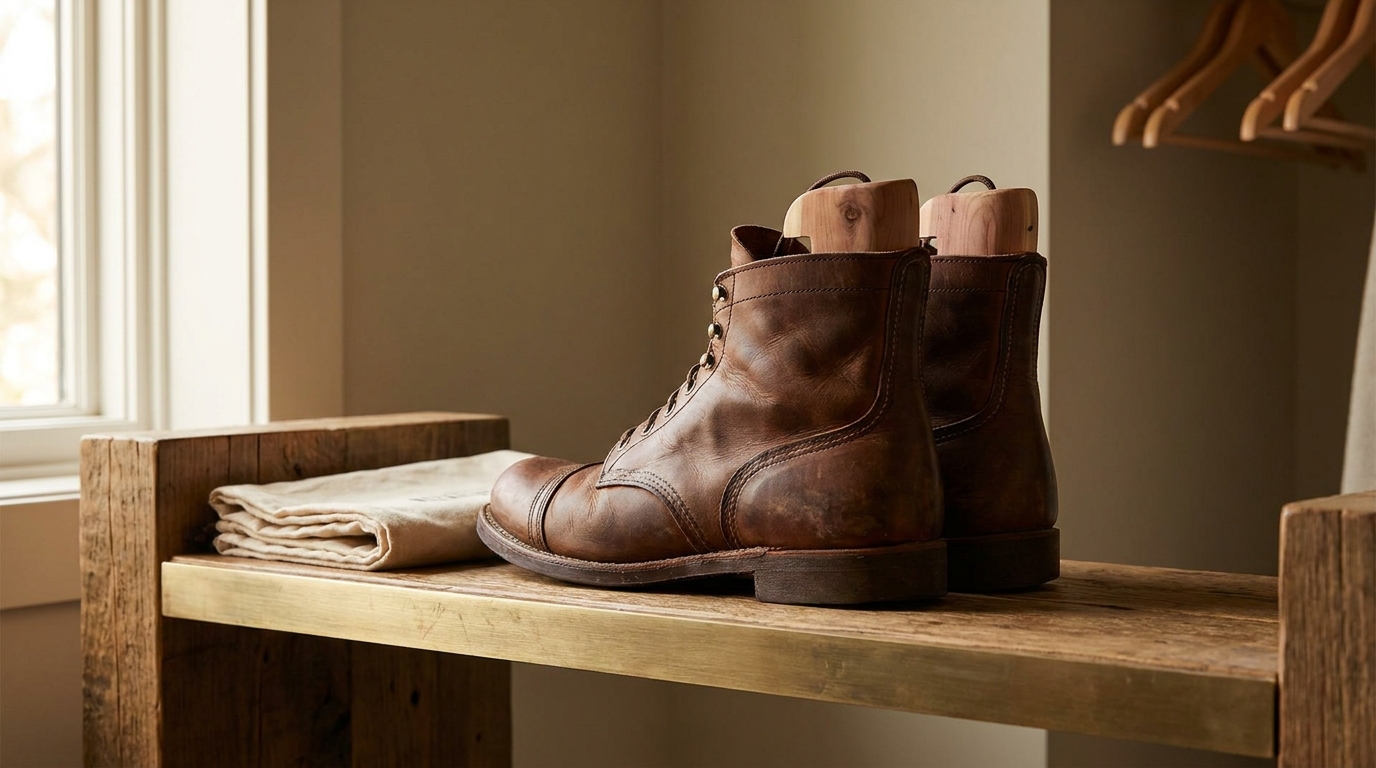
Shoe trees, not scrunched paper. Cedar shoe trees hold the shape of the shoe, wick a small amount of residual moisture, and release a mild scent that discourages mould and odour. They’re worth the money for anything leather you’re not wearing weekly.
Breathable storage, always. A cotton dust bag, an open shelf, or a cupboard with some airflow beats a sealed tub every time. If you do need to box them for moving or long-term storage, use a cardboard box rather than plastic, and don’t seal it airtight.
A moisture absorber in humid climates. Silica gel packets or a small moisture-absorbing tub (the kind sold for wardrobes) in the cupboard makes a genuine difference in coastal and tropical parts of the country. It’s a cheap habit that prevents an expensive problem.
Check on them. Every month or so, give stored shoes a quick look and a few minutes of airflow — open the cupboard, don’t let anything sit sealed and untouched for six months straight. Mould caught early is a five-minute fix. Mould left to establish can mean resurfacing the leather or, in bad cases, the shoe being unsalvageable.
If mould’s already showing up
Don’t reach for bleach — it strips colour and can damage the leather’s finish. A cloth lightly dampened with a diluted vinegar solution, or a leather-safe isopropyl alcohol wipe, will usually lift surface mould; test on an inconspicuous spot first, then dry and condition the leather afterwards since either treatment can leave it thirsty. If the mould’s gone past the surface, worked into stitching, or the leather’s started to stiffen and flake, that’s past a home fix — a specialist clean from a repairer who handles leather goods, not just resoles, is the better call. Unique Cobbler in Surry Hills and Jetty Road Shoe Repairs in Glenelg both offer professional leather cleaning alongside their repair work, and it’s a service worth using before you write a pair off — see the Related Listings on this post for their details.
Storage isn’t the glamorous part of owning good leather shoes. But it’s the part that decides whether the pair you love is still wearable next winter — and it costs nothing but five minutes and a bit of airflow.