
Repairing Cemented Boots: Why It's Often Not Worth It
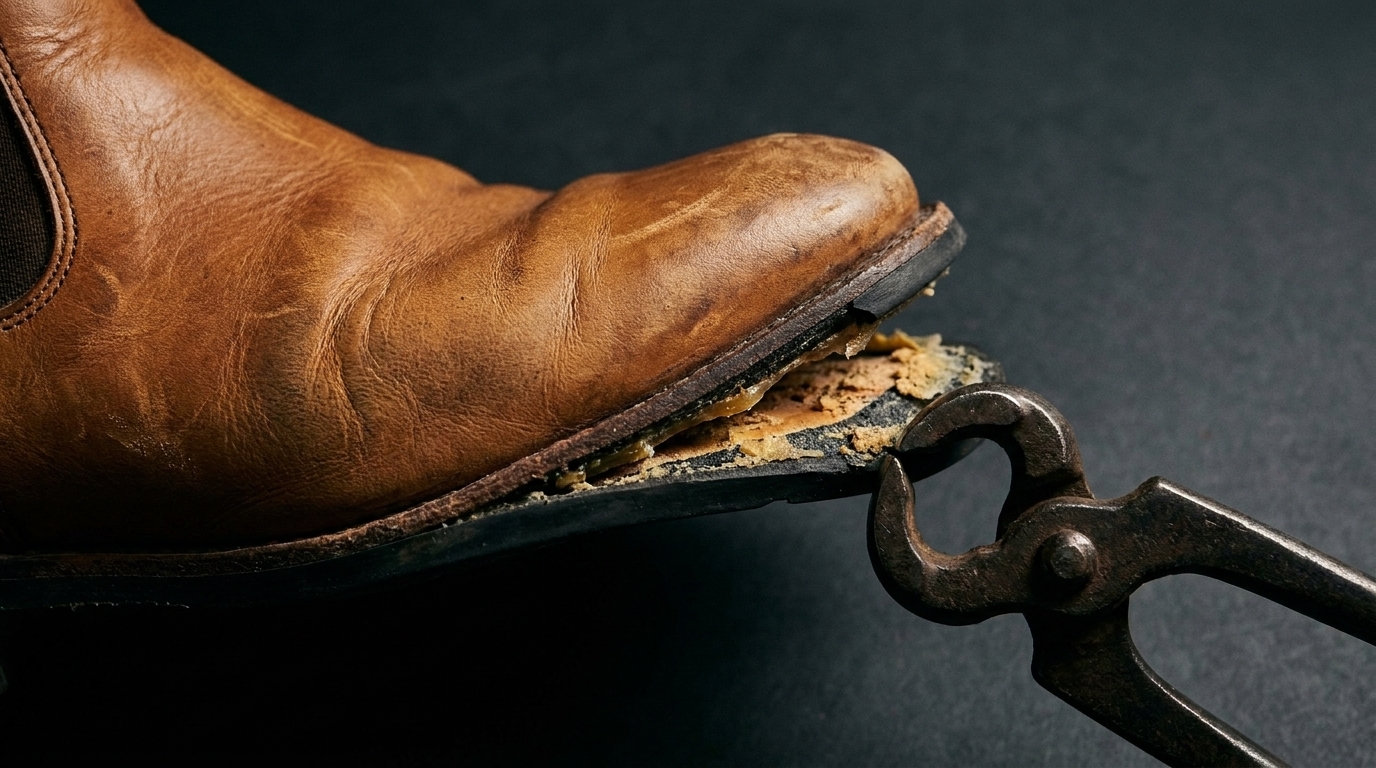
Cemented — or glued — construction is how most mass-market boots are made: fast, light, and cheap to produce. It’s also the construction type cobblers most often have to turn people away from, not because they don’t want the work, but because there often isn’t a repair that makes economic sense.
How Cemented Boots Are Built
-
The outsole is bonded directly to the lasted upper using industrial contact adhesive, usually cured under heat and pressure.
-
There’s no welt, no separate stitching between sole and upper, and no cork filling cavity — just a single glue line around the perimeter.
-
This is fast and inexpensive to manufacture, which is exactly why it dominates fast-fashion and budget footwear.
Why It’s Hard to Repair Properly
On a welted or Blake-stitched boot, the sole is designed to come off cleanly along a stitch line. A cemented sole has no such seam — it has to be pried, cut, or ground away from the upper, which risks damaging the very leather it’s meant to protect. Even when the old sole comes off cleanly:
-
There’s no welt or channel to stitch a new sole into — a cobbler can only glue a replacement on, using the same fundamentally weaker join as the original.
-
The bond rarely matches the strength or lifespan of the factory press, so a repaired cemented sole tends to fail again sooner than the first one did.
-
There’s no cork bed or insole to rebuild, so there’s nothing “underneath” to restore — the repair is skin-deep by nature.
What a Cobbler Can Actually Do
Repair isn’t always impossible — it’s just limited:
-
Rubber topy (half-sole overlay): a thin rubber layer glued over the existing worn sole, buying extra tread life without replacing the whole sole. Typically $45–$75 AUD.
-
Edge re-gluing: if the bond has only partially failed at the toe or heel, a cobbler can sometimes reglue the existing sole rather than replace it.
-
Heel top-piece replacement: the rubber heel tip can usually be swapped regardless of how the rest of the boot was built.
A full sole replacement on genuinely cemented boots is rarely offered, and where it is, it’s usually a stopgap rather than a lasting fix.
When It’s Genuinely Worth It — and When It Isn’t
A rubber topy or heel replacement is worth doing on almost any boot if the upper is otherwise sound — it’s cheap and extends life meaningfully. A full resole-style rebuild is a different question: on a $60–$120 cemented boot, spending $45–$75 to buy a few more months rarely beats putting that money toward a properly resoleable pair instead. It’s a different calculation on a higher-value cemented boot with sentimental value or a hard-to-replace fit, where even an imperfect repair can be worth the cost to keep it going a little longer.
In line with our approach across this directory: the honest answer is often “spend a little to extend it, but don’t expect a rebuild” — not a sales pitch dressed up as a repair.
Related reading
For the constructions that don’t have this problem, see What Is a Goodyear Welt?, What Is a Blake Stitch?, and The Anatomy of a Resole, which compares all three side by side. For boot-specific care that helps any construction last longer, see our boot repair tips. For current pricing on what is and isn’t worth doing, see our repair cost and feasibility guide.