
The Anatomy of a Resole: Goodyear Welt vs. Blake Stitch vs. Cemented
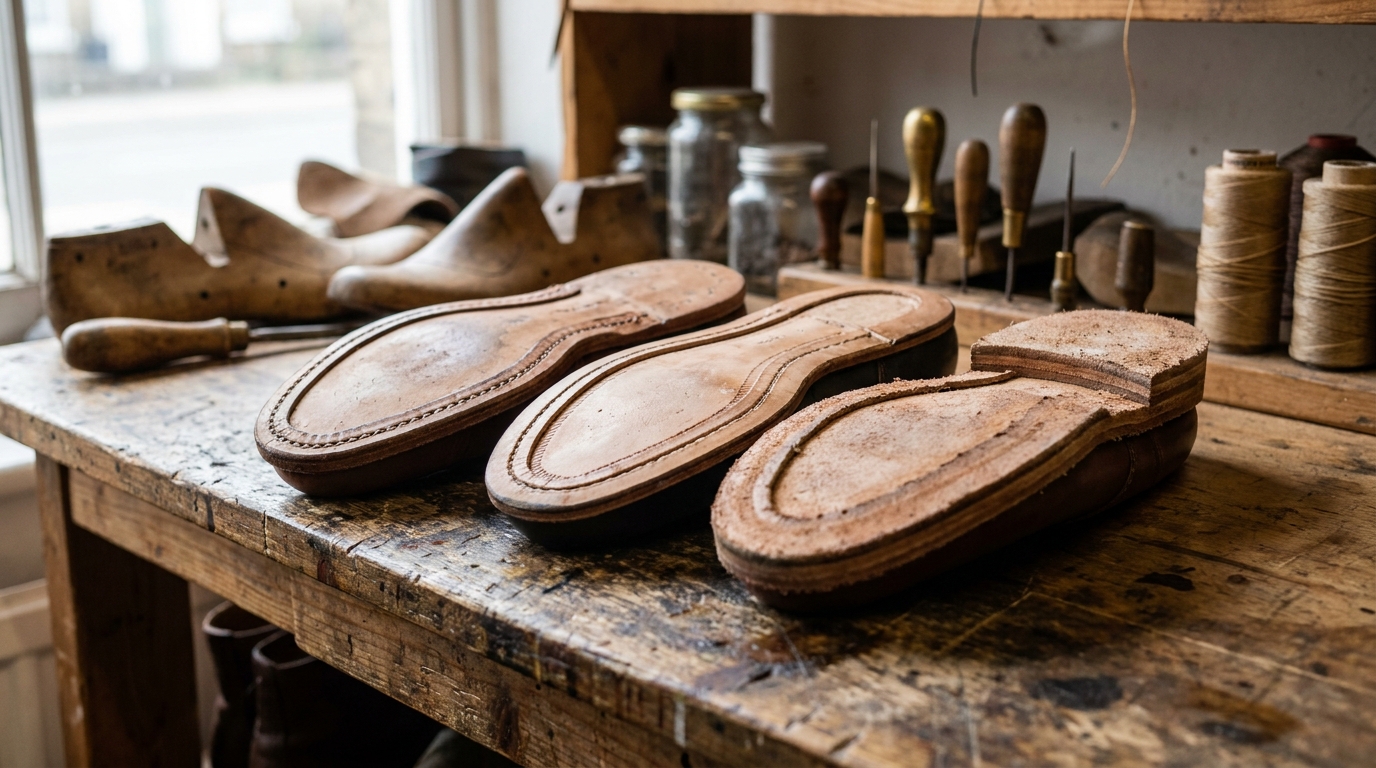
Every pair of quality leather shoes eventually faces the same milestone: worn-out soles. But whether your favourite boots can be restored to like-new condition—or are destined for the bin—comes down entirely to how the upper was joined to the sole.
Understanding construction methods empowers you to make informed repair decisions, speak the cobbler’s language, and calculate the true lifetime value of your footwear.
1. The Three Primary Construction Methods
Think of shoe construction as a repairability spectrum: cemented or glued shoes are light and inexpensive but low-repairability, Blake-stitched shoes are sleek and moderately repairable, and Goodyear-welted shoes are the benchmark for durability and repeated resoling.
Goodyear Welt (The Benchmark of Longevity)
-
How it works: A strip of leather (the welt) is stitched to both the upper and the insole rib. The outsole is then stitched directly to the welt in a separate, external operation.
-
Why it matters: The cobbler can unpick the outer welt stitch and replace the sole without ever puncturing or stressing the upper leather.
-
Resole Potential: 5–10+ full resoles over decades of wear.
-
Water Resistance: Excellent; water cannot easily penetrate the welt barrier.
Blake & Blake-Rapid Stitch (Sleek Italian Profile)
-
How it works: In a pure Blake stitch, a single row of stitching runs all the way from the interior insole, through the upper, and out the underside of the outsole.
-
Why it matters: Allows for an extremely close-cut, slim sole profile. Resoling requires a specialized Blake stitch machine.
-
Resole Potential: 2–4 resoles (puncturing the insole each time eventually limits longevity).
-
Water Resistance: Moderate; moisture can wick up through the stitch holes under sustained wet conditions.
Cemented / Glued Construction (Fast Fashion Standard)
-
How it works: The outsole is bonded directly to the lasted upper using heat-activated industrial adhesives. No stitches.
-
Why it matters: Inexpensive and lightweight, but once the bond fails or the sole wears through, resoling is difficult or structurally impossible.
-
Resole Potential: 0–1 resole (some cobblers can grind off the tread and apply a thin rubber half-sole / “topy”, but full resoles are rarely viable).
2. Construction Comparison Matrix
| Construction | Resolability Score | Average Turnaround | Typical Cost Range | Key Visual Tell |
|---|---|---|---|---|
| Goodyear Welt | ⭐⭐⭐⭐⭐ (5/5) | 1–2 weeks | $140 – $220 AUD | Visible welt seam running around outer perimeter; leather edge ridge. |
| Blake Stitch | ⭐⭐⭐⭐☆ (4/5) | 1–2 weeks | $120 – $180 AUD | Visible stitch channel inside the shoe bed under the sockliner. |
| Stitchdown (Veldtschoen) | ⭐⭐⭐⭐⭐ (5/5) | 1–2 weeks | $150 – $240 AUD | Upper is flared outwards and stitched directly to midsole. |
| Cemented / Bonded | ⭐☆☆☆☆ (1/5) | 2–4 days | $45 – $80 AUD (Half-sole only) | No visible stitching anywhere; smooth glue line at sole seam. |
3. Cobbler Inspection Workflow (Triage Protocol)
When inspecting a pair of shoes for resole viability, follow this 4-step triage:
- Step 1: Check Upper Integrity
-
Pass: Leather is supple with no tears along the flex point / vamp.
-
Fail: Deep cracking through the full grain or ripped stitch lines along the feather edge. (If the upper is compromised, a resole is not economical).
- Step 2: Identify the Welt Condition
- Inspect whether the welt itself is intact or worn through at the toe. If the welt is damaged, a re-welting service is required before sole replacement.
- Step 3: Assess the Insole Bed
- Look inside the shoe. Quality welted shoes feature thick vegetable-tanned leather insoles that mould to the foot. Ensure the footbed has not collapsed or rotted from sweat.
- Step 4: Select Outsole Material
-
Traditional Leather (e.g. J.R. Rendenbach / Baker Oak Bark): Elegant, breathable, formal.
-
Rubber Lug / Commando (e.g. Vibram / Dainite): All-weather grip, long wearing, practical for daily commuting.
4. The Economic Breakdown: Resole vs. Replace
Rule of Thumb: If high-grade Goodyear welted boots cost $500 AUD new, spending $180 AUD every 3–5 years on a premium resole cuts your annual footwear cost by over 60% compared to replacing cemented boots every 18 months.
Bring your worn pair into a local independent cobbler before the outer sole wears into the cork filling or welt—catching sole wear early keeps the repair fast, clean, and affordable.
Related reading
If you are inspecting shoes before buying, apply these construction details with our 5-point repairability checklist. If you already own the pair and need to decide whether the resole is worth it, use the cobbler repair cost and feasibility guide alongside the construction type.