
What Is a Goodyear Welt? Boot Construction Explained
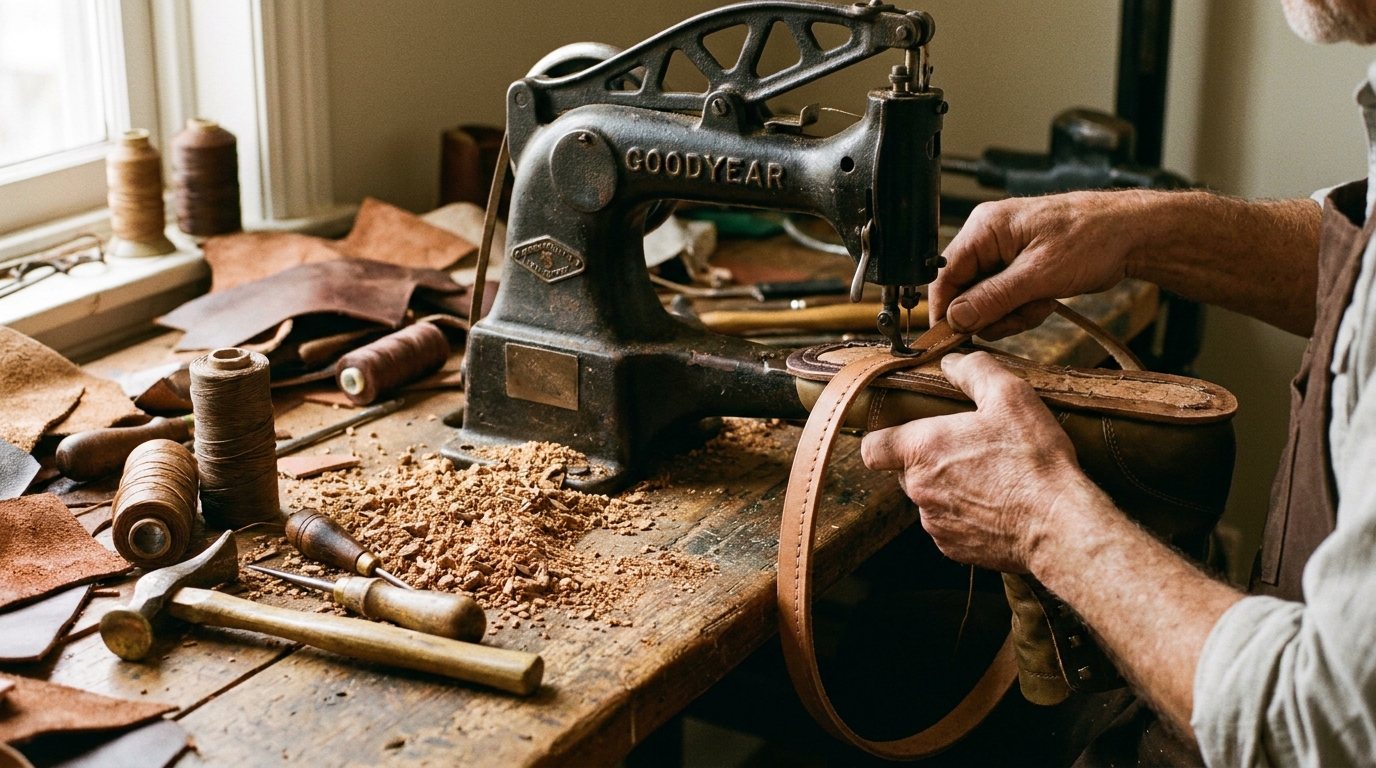
A Goodyear welt joins three parts together: the upper, a narrow strip of leather called the welt, and the sole.
-
A leather or fabric rib is glued around the edge of the insole, standing up like a small lip.
-
The upper, the welt, and this rib are stitched together in one continuous row — the “inseam” — using a specialised Goodyear welting machine, named after the same Goodyear behind the tyre company, which patented the process in 1869.
-
The cavity created inside the welt is packed with granulated cork, which compresses to the shape of the wearer’s foot over months of wear.
-
The outsole is then stitched to the underside of the welt in a completely separate operation.
Because the outsole only ever attaches to the welt — never directly to the upper — a cobbler can unpick that outer row of stitching, remove the worn sole, and attach a new one without ever cutting into or restressing the boot’s upper leather.
Why It Matters for Boot Owners
-
Resoleability: a well-made Goodyear welted boot can typically go through five to ten or more full resoles over its working life, provided the welt and upper stay sound.
-
Water resistance: the welt and cork filling form a genuine barrier against moisture working up into the boot, which is part of why the method is standard on work and outdoor boots.
-
Independent repairs: heels, midsoles, and even the welt itself can usually be replaced on their own, rather than forcing a full rebuild every time something wears out.
How to Spot One
Look for a visible stitched seam running around the outside edge of the sole, sitting slightly proud of the upper. Turn the boot over and the outsole stitching should sit inside a groove close to the welt edge, separate from any stitching on the upper. If there’s no visible seam and the sole looks moulded straight onto the upper with a smooth glue line, it’s cemented construction rather than welted.
The Trade-off
None of this comes for free. Goodyear welted boots cost more to make and more to repair than cemented alternatives, and they sit heavier underfoot. For anyone buying boots to keep for a decade rather than a season, most cobblers and boot owners agree that trade-off is the entire point.
Related reading
For a side-by-side look at Goodyear welt against Blake stitch and cemented construction, see The Anatomy of a Resole. For related deep dives, see What Is a Norwegian Welt?, What Is a Blake Stitch?, and Repairing Cemented Boots: Why It’s Often Not Worth It. If you’re weighing up whether a resole is worth the spend, our repair cost and feasibility guide has current Australian pricing.