
What Is Stitchdown Construction? Boot Building Explained
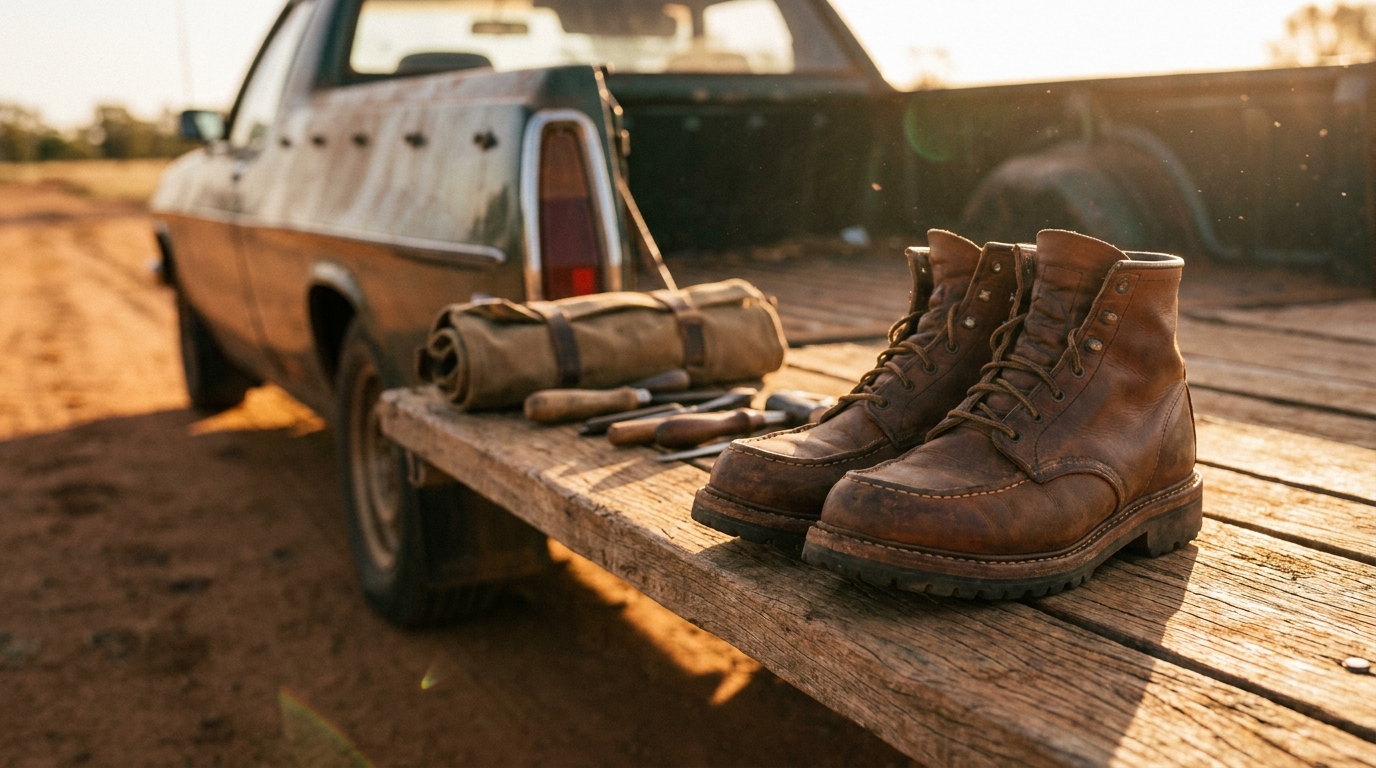
The seam you can see from across the room
Most boot construction hides its stitching. Goodyear welt tucks it under a strip of leather, Blake stitch runs it invisibly through the insole, and cemented soles have no stitching at all. Stitchdown does the opposite: it puts the seam on the outside, in plain sight, running right around the base of the boot. Once you know what you’re looking for, it’s unmistakable — a visible ring of stitching sits where the upper flares outward and is sewn directly to the sole from underneath, rather than being turned inward and tucked away.
It’s the construction behind most classic moc-toe work boots and a lot of heavier hiking and engineer-style boots, prized less for elegance and more for how much abuse it can take — see this manufacturer explainer on stitchdown construction for a closer look at how the flare-and-stitch process works.
How it’s actually built
On a welted or Blake-stitched boot, the upper is lasted (pulled and shaped) so its edge tucks under and inward, out of sight. Stitchdown flips that: the upper is flared outward at the bottom instead, laid flat against a midsole, and stitched straight through both layers and into the outsole from the outside. There’s no separate welt strip doing the joining work — the upper itself is the thing being stitched down, which is where the name comes from.
The result is a wider platform at the base of the boot than you’d get from a welted or cemented construction, and a seam that sits above the point where the sole meets the ground rather than right at the very edge. That’s part of why it turns up so often on boots built for wet, muddy, or rough conditions — there’s more structure at the point where a boot takes the most punishment.
Stitchdown vs. Goodyear welt vs. Blake stitch
What Is a Goodyear Welt? Boot Construction Explained and What Is a Blake Stitch? Boot Construction Explained both hide their stitching for a cleaner silhouette. Stitchdown trades that refinement for ruggedness and a wider base — it’s rarely the construction you’ll see on a dress shoe or a slim Chelsea boot, and much more likely on something built to be worked in. Compared with a Repairing Cemented Boots: Why It’s Often Not Worth It boot, the difference is more fundamental: a stitchdown boot has genuine mechanical stitching holding the sole on, not glue, which matters enormously for repairability.
Can a stitchdown boot be resoled?
Generally, yes — the stitching that attaches the sole can be picked out and a new sole reattached the same way, which is the whole advantage over a cemented construction. Where it gets more complicated is finding someone equipped to do it: stitchdown repair isn’t quite as universal a skill as Goodyear welt work, since it uses a different stitching setup than the welt-stitching machines most repair shops have on the bench. If you’re buying a pair specifically because you want years of resoles out of them, it’s worth asking your local cobbler directly whether they handle stitchdown repairs before you commit, rather than assuming every shop that does welted resoles also does this.
It’s a mainstream choice on heavy-duty American work boots rather than a niche technique — Pacific Northwest makers like White’s Boots have built much of their catalogue on it for exactly the ruggedness and resoleability described above.
What to check before you buy
A few things are worth a look before buying a stitchdown boot, especially if durability and repairability are the reason you’re choosing one over a cemented pair:
The stitching itself should look even and consistent all the way around, with no skipped stitches or loose thread — a giveaway of a rushed or lower-quality build. The midsole between the upper and outsole should be a genuine, substantial layer rather than a thin cosmetic strip, since that’s what the stitching is actually holding onto. And it’s worth asking the retailer or checking the specs for what the outsole itself is — a quality rubber lug sole stitched down properly will usually outlast a cheaper one long before the stitching itself is the weak point.
When to see a cobbler
Bring a stitchdown boot in when the stitching itself starts to fray, pull loose, or show gaps — that’s a sign the seam needs attention before water starts getting in around it, not after. A sole that’s worn flat but still stitched on tight is often a straightforward resole for a cobbler set up to do the work. And if the upper has pulled away from the midsole in a section rather than just the outer stitching wearing, that’s worth a proper inspection rather than a DIY glue fix, since it usually means the stitching has failed rather than just the tread.
FAQ
Q: What is stitchdown construction?
A: Stitchdown is a boot-building method where the upper is flared outward at the base rather than tucked under, then stitched directly through a midsole into the outsole from the outside — leaving a visible ring of stitching around the boot rather than a hidden seam.
Q: Is stitchdown construction better than a Goodyear welt?
A: Not better, just built for a different job. Stitchdown gives a wider, more rugged base and is common on heavy-duty work and outdoor boots, while Goodyear welt gives a slimmer profile and is more widely serviced by everyday repair shops. Neither is a straightforward upgrade on the other.
Q: Can stitchdown boots be resoled?
A: Usually, yes — the stitched construction means the sole can be removed and replaced rather than only patched. The catch is availability: not every cobbler is set up for stitchdown repair the way most are for Goodyear welt work, so it’s worth checking with a repairer before buying if long-term resoling matters to you.