
How to Buy Shoes That Can Actually Be Repaired: The 5-Point Checklist
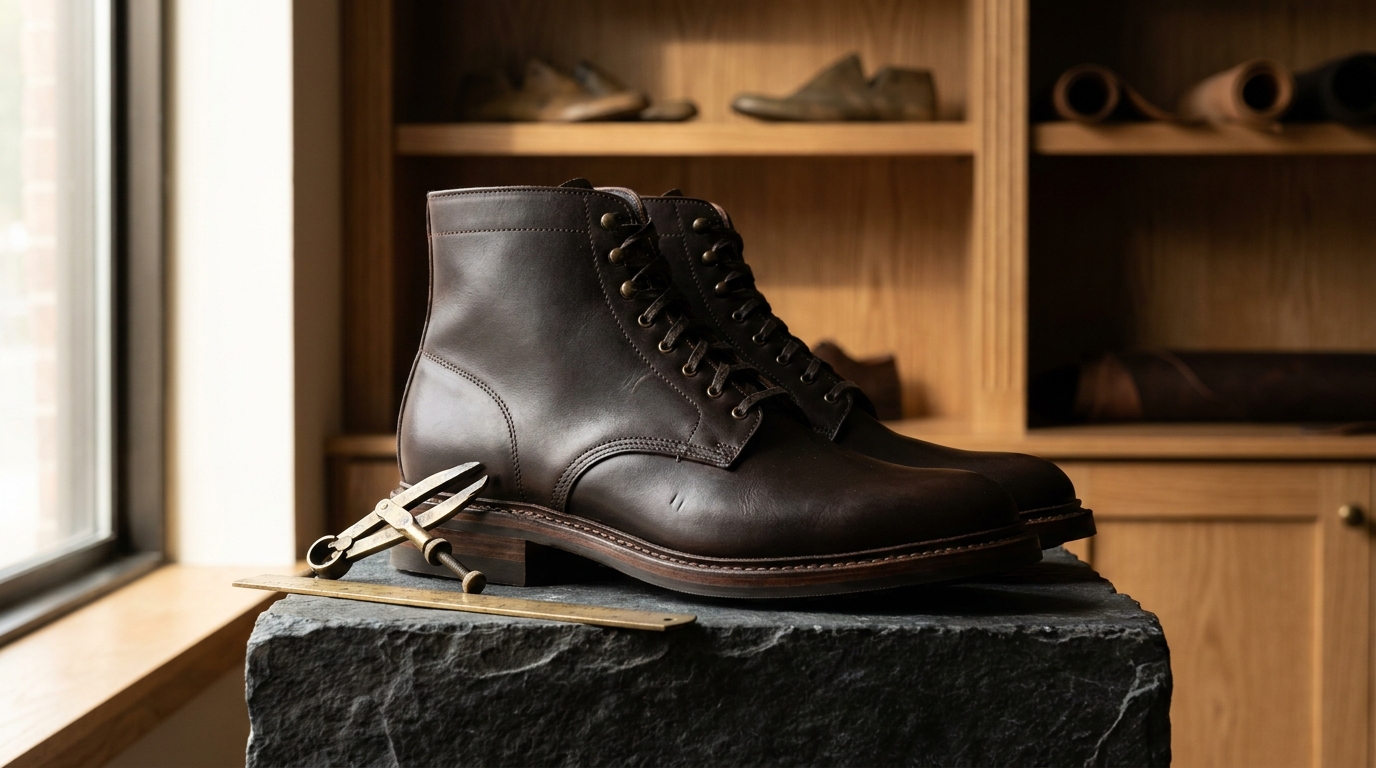
Not all shoes are engineered to last. In an era dominated by moulded synthetic soles and heat-fused construction, finding footwear that an independent cobbler can service year after year requires knowing what to look for on the retail floor.
Use this 5-point framework to inspect boots, dress shoes, and casual footwear before you tap your card.
1. The 5-Point Repairability Scorecard
When evaluating a new pair, score each criterion from 0 to 2 points (Max score: 10).
Score guide: 8–10 indicates lifetime-heirloom potential, 5–7 indicates a serviceable shoe with a moderate lifespan, and below 5 usually points to disposable fast-fashion construction.
1. Welt & Sole Joining Method (0 to 2 pts)
-
2 pts: True Goodyear welt, Blake-Rapid, or stitch down construction with external lock stitching.
-
1 pt: Direct Blake stitch (insole-to-outsole) with accessible stitch channel.
-
0 pts: Cemented / vulcanized sole with no mechanical stitching.
2. Upper Leather Substance & Grain (0 to 2 pts)
-
2 pts: Full-grain vegetable-tanned or combination-tanned leather (1.8mm–2.2mm thickness).
-
1 pt: Top-grain or corrected grain with light finish coating.
-
0 pts: Genuine leather (split leather with polyurethane film) or bonded leather fiber.
3. Insole & Midsole Architecture (0 to 2 pts)
-
2 pts: Solid thick leather insole with natural cork bed filling.
-
1 pt: Fibreboard midsole with leather sock liner.
-
0 pts: Moulded synthetic foam, paperboard, or plastic honeycomb footbed.
4. Heel Stack Assembly (0 to 2 pts)
-
2 pts: Solid stacked leather heel with replaceable rubber top-lift secured with brass nails or screws.
-
1 pt: Solid synthetic block heel.
-
0 pts: Hollow moulded plastic heel with faux-leather wrap.
5. Lining & Hardware Durability (0 to 2 pts)
-
2 pts: Full natural leather lining with solid brass/metal eyelets and speed hooks.
-
1 pt: Partial canvas/leather lining with plated alloy hardware.
-
0 pts: Synthetic PU lining that flakes over time; weak cast eyelets.
2. Red Flags: Don’t Be Fooled by “Faux-Welts”
-
Decorative Storm Welts: Many mass-market brands mould a fake plastic welt complete with synthetic stitching along the perimeter of a cemented shoe.
-
How to test: Check where the welt seam meets the heel. On authentic welted shoes, the welt joint or 270/360-degree stitch terminates cleanly. On glued fakes, the “stitching” is a continuous rubber mould with no thread depth.
-
Integrated Rubber Cup Soles: While comfortable, sneakers and casual shoes with cup soles require specialized “sneaker resole” cobblers and replacement sole units that match exact brand dimensions.
3. Brand & Construction Reference Directory
| Price Tier (AUD) | Typical Construction | Recommended Makers / Examples | Repair Horizon |
|---|---|---|---|
| $200 – $350 | Blake Stitched / Entry Goodyear | Meermin, Thursday Boot Co, Thomas George Collection | 3–6 years (2–3 resoles) |
| $400 – $750 | High-Grade Goodyear Welt | R.M. Williams, Red Wing, Carmina, Loake 1880 | 10–20+ years (5–8 resoles) |
| $800+ | Hand-welted / Bespoke Welt | Crockett & Jones, Edward Green, Viberg | 20–40+ years (Heirloom) |
4. The Golden Rule of Footwear Investment
“Buy once, repair well, polish often.” Investing an extra $150 upfront for true welted construction eliminates the cycle of buying $180 disposable shoes every 12 months.
Related reading
For a deeper look at why stitched construction changes the repair horizon, read our resole anatomy guide covering Goodyear welt, Blake stitch, and cemented shoes. To test whether the purchase price still makes sense years later, compare it against the repair thresholds in our cobbler cost and feasibility guide.